(Books for Readers Young and Old #1)
Picture books have suddenly become significantly more relevant in my life. If you can’t tell from this blog already, I care a lot about where I came from, and love the stories I used to read and games I used to play. Because of this, I have a significant stash of picture books from when I was a child. Pulling them out has been a lot of fun – finding ones we can read to our little one and that we will read to him in the future reminds me of why I kept them in the first place.
However, since I was a child, there have been a significant number of picture books written. It is a bit overwhelming to explore this market, which is why I am planning on writing reviews not just of novels, but also of books targeted towards children, discussing the messages in the story and whether or not I recommend them for young readers (or listeners).
Today, I’ll be going over Jon Klassen’s Hat Trilogy, three picture books with no connections whatsoever (besides the artistic style) that all feature hats. Each story is unique, with its own purpose.
NOTE: For this series, you should expect spoilers along the way, as the goal of these articles is to comment on the quality of material for younger readers. As always, I will try and alert you when spoilers are coming!
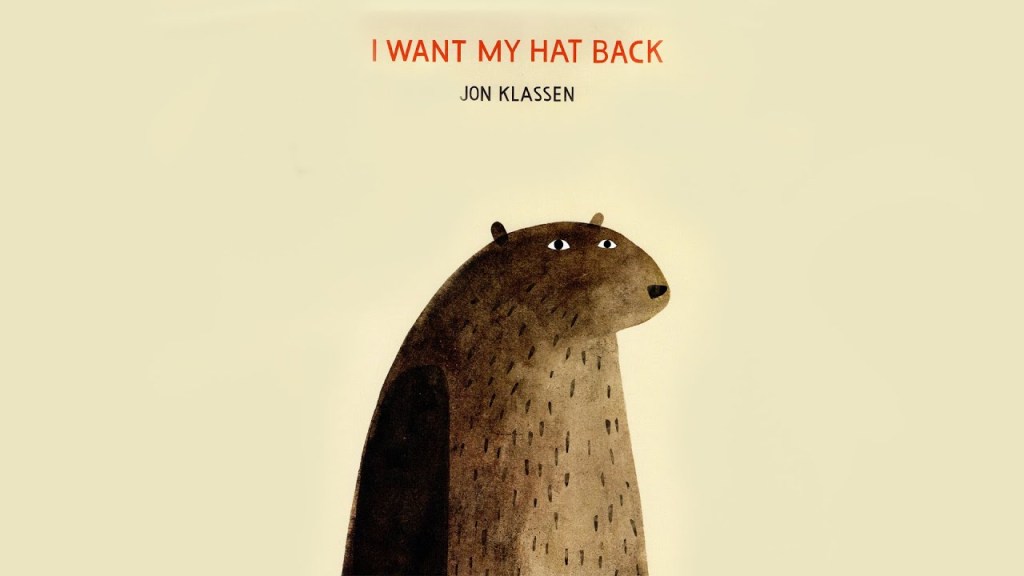
I Want My Hat Back

We’ll go in order of publication, starting with I Want My Hat Back. This book’s premise is simple, as most picture books tend to be. In this book, a lovable bear has lost his hat. He is going around and asking other creatures whether or not they have seen it.
Age of Accessibility
This book is easy to read and accessible for younger children when read by a parent, and a great story for early readers as well.
Is the book well-written?
When talking about picture books, well-written is subjective, obviously. This metric is different for different types of books. If the book is simply showing pictures with words, reviewing this category is very different than if there is an actual story. I Want My Hat Back is a short story, but it is entertaining, and it uses the classic picture book trope of one character interviewing multiple others, allowing the reader to use varied voices as he or she reads aloud.
Art
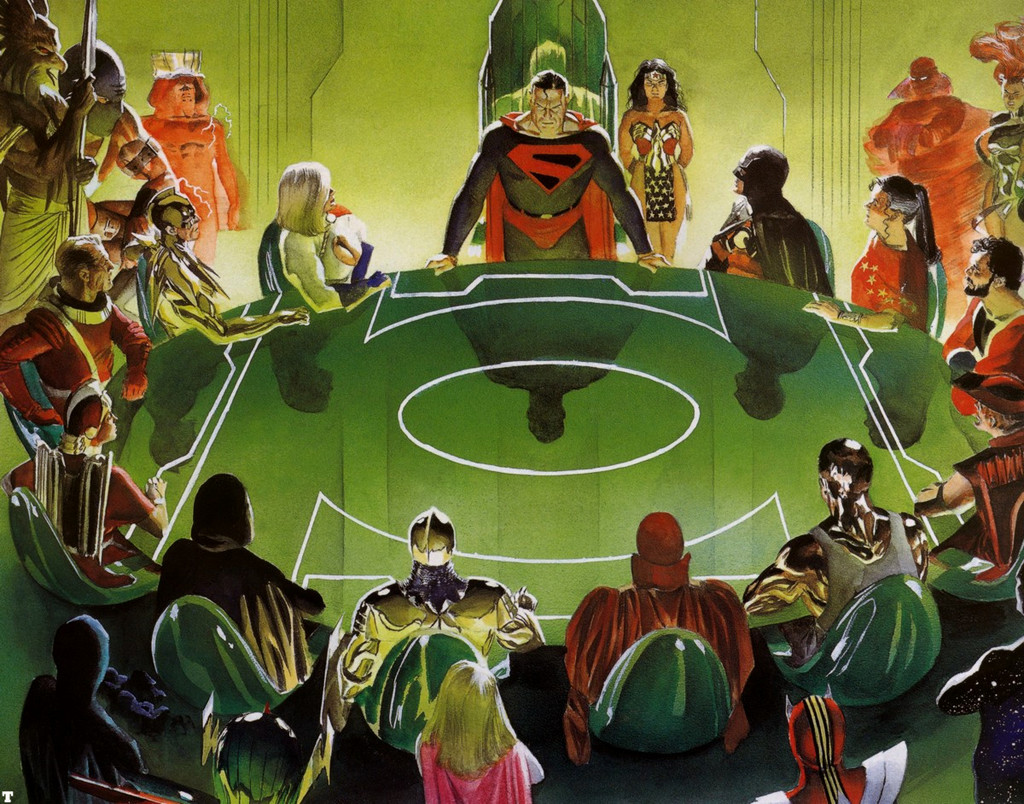
Picture books are significantly different from normal prose in multiple ways, but perhaps the most significant is the emphasis on art. A good picture book needs to have, well, pictures, and these pictures need to match the text well. Interestingly, comparisons can be easily drawn to comics and graphic novels here – good comics have art that complements the writing effectively. Not every comic artist needs to be Alex Ross to create a masterpiece.
Art can be simple and still be effective, and Klassen’s illustration technique is an excellent example of that. The images are not overly complex, but they work perfectly for the story – charming, engaging, and enjoyable.

Purpose
Different picture books serve different purposes. Some are written to educate, some are written to calm or soothe, some are written to teach a moral lesson, and some are written simply to entertain. This book is a buildup to a punchline, and the goal is to shock and amuse the reader at the end. It certainly succeeds in its goal – I read this for the first time as an adult and thoroughly enjoyed it despite being leagues away from its target audience.
Recommendation?
I Want My Hat Back would be a welcome addition to nearly any children’s book collection. However, it is important to note for more sensitive readers that in this book (SPOILER), a rabbit steals a hat from a bear, and in the end, it is heavily implied that when the bear gets his hat back he has also eaten the thief. It is presented comically, but could upset some readers. (END SPOILER)
That being said, the execution (no pun intended) is quite well done, and this story has quickly become a personal favorite of mine. Because of this, I can easily recommend this book!
This is Not My Hat

The second book in the hat trilogy is This is Not My Hat. This one is… interesting. I owned the first and third books in this trilogy for a while, and then stumbled across this one. The completionist in me felt the need to own all three, so I purchased this one. I don’t… regret my purchase? I don’t think? But I can’t quite decide how I feel about this one.
Age of Accessibility
This story is very confusing for a young reader who can’t both understand the words on the page and understand what is going on in the pictures. If you just read the words, the story’s message is… not good. The pictures are what give the story its charm, but they are a bit subtle and may require explanation for younger readers.
Is this book well-written?
As with I Want My Hat Back, the actual writing in this story is very good. I was very entertained by it, even as an adult! The narrator is a small fish who has stolen a hat from a much, much larger fish, and he is on the run. The gimmick of the story is that everything the small fish says is then immediately contradicted by the art on the page, which makes for an entertaining contrast.
Art
This category remains consistent through each of the stories in The Hat Trilogy – Klassen uses the same illustrative style in every story, making them feel like they could almost be connected (or at least take place in the same world).
Purpose
This story is written to entertain and amuse, but is also there to teach an important lesson, reflecting the biblical idiom: “Be sure your sin will find you out”. It is obvious from the first page, where the text reads “This hat is not mine. I just stole it” that at least part of the moral is going to be “do not steal”, but the book takes it one step further than that, by showing every step of the way that there is no way this little fish is going to get away with his crime – his theft will be exposed, even though he has come up with a plan to keep himself from getting caught.
Recommendation?
Earlier, I stated that I was unsure about this story. Then I said that it reflects a biblical truth. So, which is it? Is this story problematic, or is it a good lesson for kids? The answer is… both? The lesson here is presented in an entertaining and effective way, and the story is enjoyable to read aloud. By all accounts, it should be a full recommendation.
However, there are a few aspects that give me pause as a reader and a parent. First of all, our protagonist is a thief, and his narrative is only contradicted by the pictures (as mentioned earlier), and he talks about his strategies to get away with his theft. They don’t work, obviously, but it could be read as instructions for how to steal without getting caught, if you get luckier than the fish.

There is also a small detail with a crab that rubs me the wrong way – the crab promises not to tell the big fish where the little fish is going, and then immediately rats him out to the big fish. This means that the crab lied to the little fish, but the crab isn’t a villain or portrayed in any negative way. Lying in picture books meant for very young readers needs to be handled properly, and the nonchalant lie portrayed as the right thing, even in this small, nearly insignificant capacity, can be enough to give parents pause.
The last and perhaps most significant thing that rubs me the wrong way about this book is that (SPOILER) the thief once again is eaten by his victim. “But,” you might say, “wasn’t this one of the things you enjoyed about I Want My Hat Back?” You would be correct, but here, it feels a bit different – the only speaker in this story is the little fish, and at the end, there are no more words because the little fish, presumably, has been eaten. It elicits a different feeling than the rabbit in the previous story, because he was a much more minor character than the little fish. This feels a bit more personal – you get to know the fish a bit better, making his death a bit more disturbing for younger readers when contrasted with the comical consequence of the rabbit stealing from the bear. (END SPOILER)
Overall, I would have to say that I do not recommend this picture book – you may think that I am being overly sensitive, but there are so many good books out there that one like this is not worth getting if you can teach the same lesson without these little issues. However, if these aspects bother you less than they do me, this novel is still quite entertaining and can be, as a plus, used to teach a lesson about an unreliable narrator. I plan to keep my copy, and will probably read it more than once to my little one when he’s either too young to understand the story or old enough to get what is going on, but it will not be one of the books that I read over and over again, unlike this next one:
We Found a Hat
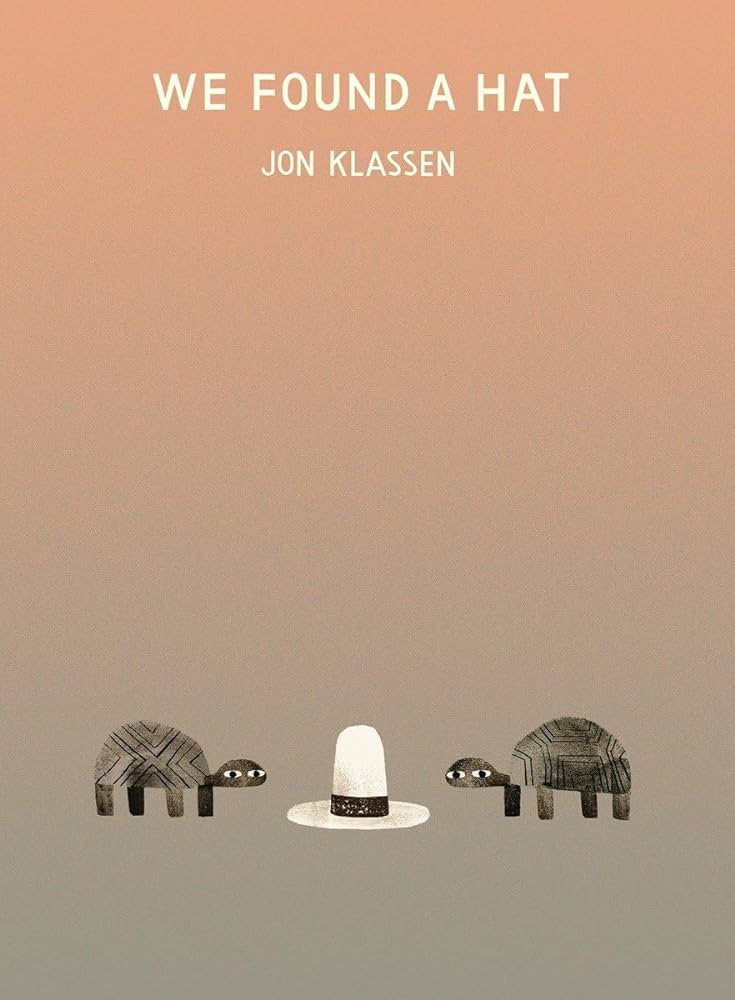
This is the order I would have chosen to review these books even if this weren’t a “trilogy”. When I teach my students how to write persuasive essays, I tell them that the best order to arrange their arguments is: middle argument first, weakest argument second, strongest argument third. The same principle applies here – I started with my second favorite, followed it with my least favorite, and ended it with the one that I love the most.
As with most of these stories, We Found a Hat is simple. Two turtles have found a hat. The problem? There are two turtles, and only one hat. And hats only fit on one head. So who gets to keep the hat?
Age of Accessibility
This book can be easily understood and enjoyed by readers of any age, though older readers understand a bit more about what is going on in the narrative.
Is this book well-written?
This book differs from the other two in a few ways, but one of the most significant is that the overall point is not to be amusing, but to tell a short but touching story (while still maintaining the humor of the other two). Klassen proves from this story that he is able to not only make kids laugh, but able to pull at your heartstrings a little bit as well. So yes – this book is very well written.
Art
The art is pretty similar to the other stories (in fact, it seems that the same turtle shows up in I Want My Hat Back), but it is even more simple. The entire story takes place in two repeated settings – a field and a rock. There are also only two characters – the two turtles. However, the art once again perfectly complements the story.
Purpose
This story’s purpose is to teach a lesson about greed, but also about friendship. It also introduces the reader to a three-part format – the story starts off with a page that says “Part One: Finding The Hat”, and continues with parts two and three. It is also a very relaxing story, great for pre-bedtime reading.

Recommendation?
This one I can recommend with absolutely no reservations. In order for me to explain why, I am going to give an overview of the actual story. I highly recommend reading this story without knowing what happens (as my explanation will not be as effective as the actual story), so if you’d rather go in blind, skip over this next section! (SPOILER) Two turtles, as I have said, have found a hat. But there is only one hat, and there are two turtles, and they both found the hat together. The turtles agree that instead of one of them having the hat and the other having no hat, they will leave it behind. They go up on a rock, and settle in for the night.
One of the turtles starts going to sleep right away. The other turtle, however, is distracted, staring at the hat. He checks if the other turtle’s eyes are closed, and starts sneaking off the rock, still talking to his friend as he heads towards the hat. It is obvious that he intends to keep it and probably run away with it. However, as his friend is talking he says that he is dreaming, and that in his dream both turtles are wearing hats. The would-be thief responds with “We both have hats?”, and then leaves the hat to sit back next to his friend, and fall asleep. The book ends with two turtles, wearing the same hat, floating in a starry expanse. (END SPOILER)
It is a story about temptation, and about overcoming. It is about appreciating what you have instead of greedily searching for more. It is a story about friendship and fairness, and it teaches lessons that are valuable at any age.
Ever since the first year of our lives, my father has given each of my three siblings and me a book every Christmas that he loves. Now, it is my turn to pass this tradition on in my new nuclear family, and this book is on the list. It is a special book, one that I will be reading and rereading to my children over the years.
If I have not yet made it obvious, I thoroughly recommend this book.
Final Thoughts
I thoroughly enjoyed my read-through of Jon Klassen’s hat trilogy, and it has made me very interested in reading more of this author/illustrator’s work, as he has been writing for a very long time. I have read at least one other story which I will likely review in a later article.
I have a treasure trove’s worth of other stories to write about, and I am looking forward to tackling them. I am an avid collector of children’s literature, particularly chapter books, and I am looking forward to revisiting some of these old worlds that I used to love so thoroughly. I hope this review has been helpful for you – I feel that this was a perfect place to introduce this series at large.
Happy reading!

Related Reading

Books for Readers Young and Old – An Introduction
I will be starting a new series on this blog about books for young readers! This is an introduction to the type of content I will be reviewing.

The Stormlight Archive #1 – The Way of Kings
A review of Brandon Sanderson’s novel The Way of Kings.
Alan Moore’s Swamp Thing (Part One)
The first part of a review of Alan Moore’s Swamp Thing – an incredible work of fiction that transformed the character forever.


 A Thinker in Space
Leave a reply to Anonymous Cancel reply