
This article is a collaboration with The Promise, the newsletter of the New Jersey Gifted and Talented Association. These articles will be published in The Promise, and available here as well.
The world of media is overwhelming. There is a seemingly unending flow of shows, video games, board games, movies, music, and books coming out every year. We live in a world of oversaturation – with access to so many platforms for delivery, finding media specifically tailored to your interests or expectations has never been easier, but there also has never been more to sift through to separate the high-quality media from content that is either not worth watching or flat-out harmful to young viewers. That is the goal of this series of articles – to give you some high-quality media that is specifically geared to or particularly enjoyable for children in the gifted community. Last week, I reviewed two video games that fit this mold – if you would like to check that out, that article can be found here.
This time, we’ll be headed to a corner of media that, while it serves an important purpose, can once again be difficult to sort through without hands-on experience – the world of children’s television. Now, let me start here: I am a staunch defender of cartoons. Even as an adult, I enjoy quality animated movies and television shows. As a consumer of animated media, I have found that most shows targeted towards kids fall into one of four categories. First, we have Just for Kids!: shows that are excellent for children, but aren’t particularly enjoyable for adult viewers. This would be shows like Dora the Explorer, Paw Patrol, and the like. Can an adult still enjoy watching these with their kids? Absolutely! But it is unlikely that an adult would sit down and watch these independently of their children.
The second category is Good Shows, but Not for Kids: shows that are enjoyable for adults, but not good kids shows. This category is fully dependent on personal beliefs about what content children should be viewing, so I will not give examples, as my line will likely be different from your own. This category does not include adult cartoons – the target audience of this content is still children. This is any show that has high quality story writing, and can be enjoyed by older viewers and adults, but even though these shows are targeted towards young viewers, they contain content that the parent is not comfortable with the child consuming.
The third category is Shows to Avoid: shows that are not enjoyable for adults (the plotlines are basic, the content is juvenile, just like in the first category) but they are also not good for kids. This again depends on your own line, but I would guess that for most parents, there are multiple shows that fall into this category right away.
Finally and most importantly, we have Well-Rounded Shows. From a critical perspective, these are the best ones. These shows are enjoyable for young viewers, but they also are fully enjoyable by parents. These are the shows that I enjoy the most, though I will dabble in shows that fall into my Good Shows, but Not for Kids category at times. Both the shows I will be reviewing in this article fall into this category, and these are the shows that are the trickiest to find but the most rewarding when you do. For gifted children, these types of shows are a sweet spot. They take children beyond the simplicity and comfort of Just for Kids shows into something more nuanced and enjoyable for them, as they can more easily appreciate what makes these shows not just fun to watch but also high-quality fiction.
#1 – Phineas and Ferb

Spoiler alert – both the shows on this list are well-established high-quality pieces of media, and are quite popular with fans who are adults and children alike. Phineas and Ferb is, without a doubt, one of my favorite shows of all time. I fully expect to write a full-fledged article (or series) about this show at some point because of this fact. The characters are excellent, nearly every joke hits, and the writing is shockingly clever at times.
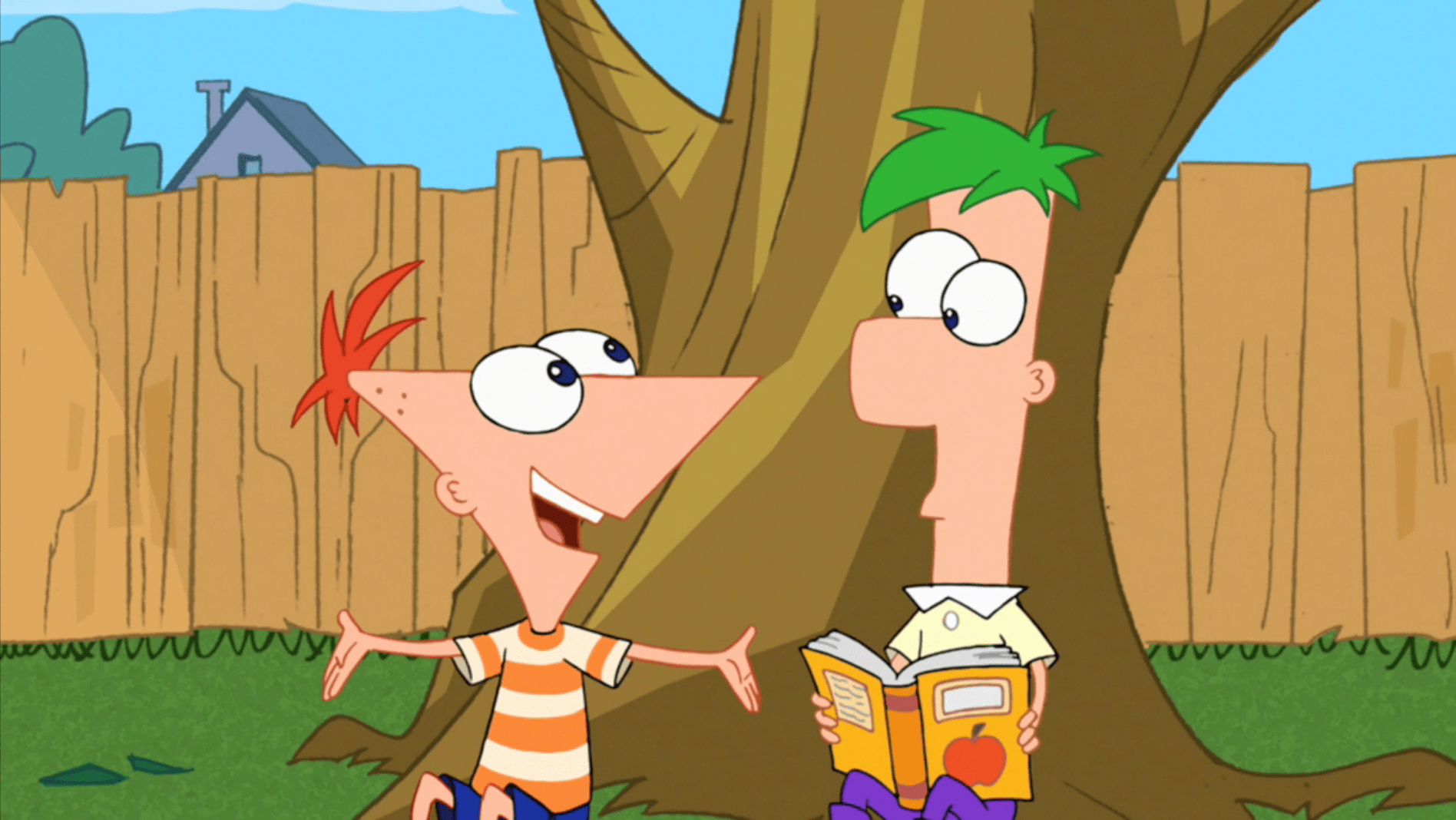
Let’s start here – what is Phineas and Ferb, and what sets it apart from the hundreds of other shows about strange-looking animated kids? Phineas and Ferb, named after the two titular characters, was directed by Dan Povenmire and began in August of 2007. The show reached its end in June of 2015, with an additional film released in 2020. Each episode consisted of two independent 10-15 minute stories, with a few episodes that are full-length and a couple episodes that are two parts.
One of the hallmarks of Just for Kids! shows is the predictability of the story. Each show has its own formula that episodes follow, creating a comfortable and enjoyable atmosphere for young viewers. They know what to expect, and there are very few surprises. Phineas and Ferb disguises itself as one of these shows at first, which is part of its brilliance. The formula is pretty basic – our two main characters build an impossible contraption in the backyard. Their sister, Candace, sees the invention and tries to get their mom to see it also. Meanwhile, across town, Phineas and Ferb’s pet platypus Perry is a secret agent who fights his arch-nemesis, Dr. Doofenshmirtz, who is a mad scientist trying to take over the Tri-State Area. Perry fights Doofenshmirtz, foiling his plan and in the process unintentionally destroying or removing Phineas and Ferb’s invention just in time for their mom to come home, who misses everything, much to Candace’s constant chagrin.

If that was the whole show, you’d have a decent Just for Kids! model here, one that is entertaining and enjoyable to let your kids watch. But Phineas and Ferb’s brilliance is in the way it plays with this formula, subverting expectations and creating clever and enjoyable character relationships. This show has over a hundred episodes and two movies, and none of them are bad. The beginning is a bit more formulaic as characters and patterns are established, but before the first season is half over, you have a self-aware show with an endearing cast and a entertaining sense of humor. Instead of filling Phineas and Ferb with toilet humor or other low-brow comedy to pull kids and adults into this show, Povenmire instead relies on clever and witty comedy that is occasionally cerebral and always aware of its own absurdity, creating a sense of humor that becomes more enjoyable the more you watch.
This show is superb, and has strong positive messaging alongside its snappy dialogue and excellent writing. At its core, it is a show about friendship, but also about making every day count, and being willing to reach for the stars and achieve your fullest potential. There are bad days in Phineas and Ferb, but they all matter, and the show’s optimism and heartfelt drive to remind you that life is an adventure full of excitement and unexpected joys is unmatched by most other fiction I have experienced. Phineas and Ferb is truly something special, and it is a piece of media that gifted kids will particularly enjoy due to deceptively simple plotlines, its excellent writing, and its enduring themes.
NOTE: This show has been picked back up for a new season in 2025. This review is of the original show – though I will likely be giving my take on the reboot when it eventually arrives!
#2 – Avatar: The Last Airbender

This is another of the best animated shows of all time, and that is not simply me talking. This show constantly ranks on top lists for animated television, for good reason. It is a hallmark of high quality animation – a standard set that many shows have attempted to reach, and most have fallen short of.
NOTE: Once again, interestingly, I need to clarify – I am talking about the original 2005 Avatar: The Last Airbender cartoon, not the live action reboot, though I will likely review that at a later date (is there an echo in here?)
Avatar: The Last Airbender was released in 2005, and ended in 2008. This show had a story to tell, and it told it expertly in only 62 episodes. Three seasons, each with a defined arc, telling a character-driven narrative that leaves you wanting to watch the next episode pretty much the moment the one you were watching ends.
This show takes a lot of inspiration from the flood of Anime that was filling American television at the time of its release, playing with some of the same tropes and using an animation style more akin to Anime than traditional American cartoons (a style that was executed with resounding success a few years earlier in the release of Teen Titans, which aired concurrently with Avatar). All that being said, Avatar was and still is in a class of its own.
The writing in Avatar is once again impeccable. The worldbuilding is established very effectively (in the world of Avatar, there are people able to manipulate the elements of water, earth, air and fire, and an Avatar that is able to use all four), and is well-utilized throughout the story from beginning to end. The story itself, while deceptively simple, is woven expertly through the three seasons of content, bringing us from simple beginnings to explosive climactic moments at the end.
The show, as with most shows of this era, has a slow start as it establishes its characters and storyline – Aang, the new Avatar, has to learn all four types of bending so that he can help to fight against The Fire Nation, a country at war with the rest of the world seeking global domination. He flies around with his friends and has adventures on his journey, though there is always an eventual destination that the cast is trying to reach.
What sets Avatar apart? First, this is an excellent introduction for young viewers to a cohesive storyline that flows from one episode to another. The storyline of Avatar starts in the first episode, and there is a natural progression of events to the finale without being overwhelming for the viewer, as it was still aired on prime-time TV.
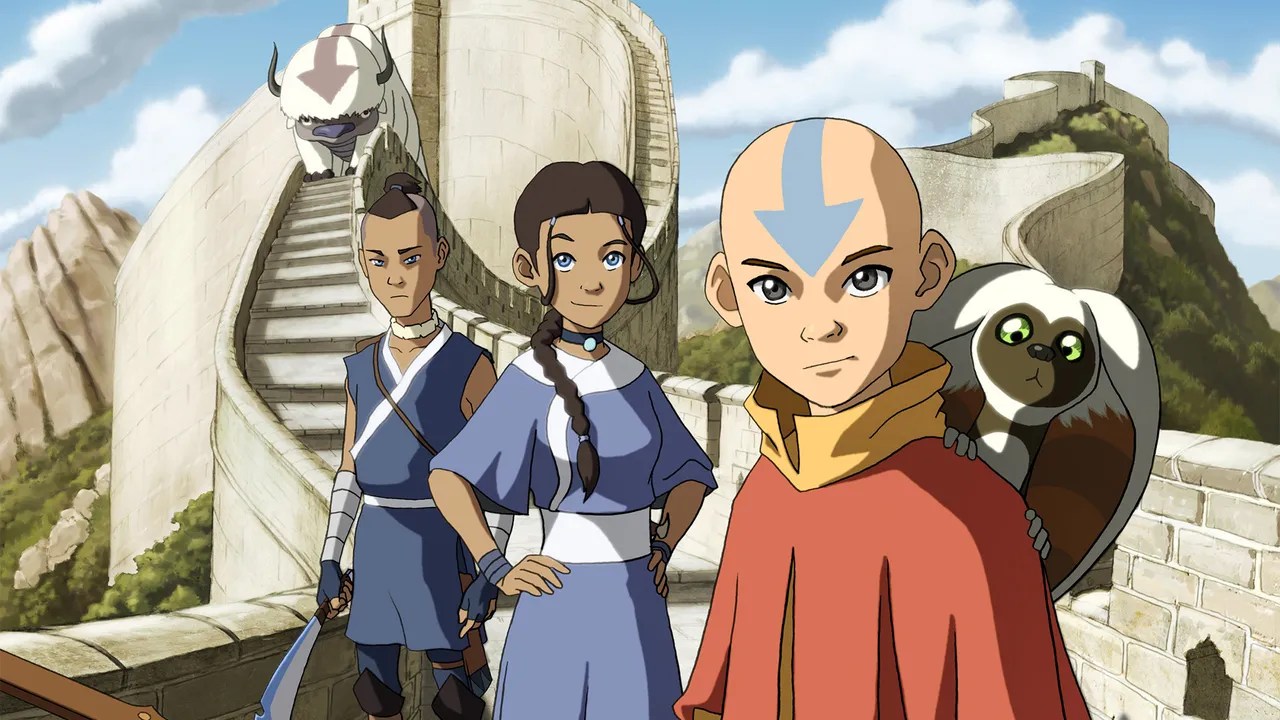
But Avatar was much more than a story. It was a nuanced, philosophical discussion on war, on responsibility, and on the sanctity of life. Aang and his friends wrestle with difficult questions, and though some are answered by the writers in healthy and productive ways, others are left for the audience to ponder. Aang tries to do the right thing, but sometimes viewers might disagree with his choices, and sometimes other characters in the show might question his decisions.
Because of its depth and some truly excellent character development throughout the three seasons of this show, resulting in shocking twists, fascinating plotlines, and discussion-generating explorations on complex questions, this show is perfect for gifted viewers.
Though Phineas and Ferb is generally fine for all ages, Avatar is more geared towards upper elementary-aged students – the show has a bit more action and thus minor violence, and it does wrestle with complex philosophical questions that might be better introduced to an older audience. There are also scenes that can be frightening for young viewers, so it is worth screening before viewing if this is a concern.
Additional note: There are a series of sequel comics to Avatar: The Last Airbender that are also excellent. If you are interested, check them out here: Part 1, Part 2
Final Thoughts
Both of these shows are some of the best fiction I have every viewed, and it is a privilege to be able to share them with you! They are uniquely enjoyable to young gifted viewers, and will give your child high-quality entertainment that is still fun to watch. In an oversaturated world with new content releasing every day, knowing a few solid high-quality shows to fall back on is always worthwhile. And, once again, I highly recommend these shows for both kids and parents, as they can be enjoyed by viewers of any age.


 A Thinker in Space
What do you think?