
For more information about this series, please see the introductory article here.
Last year, I suddenly had a blast of nostalgia, and these games came back to me in a rush. Unfortunately, my scattered memories of them did not actually come with any concrete information, and thus the search began. I asked family members, and though some remembered the games, no one had any concrete information. We owned at least one of them, and I played many of them at school when I was in computer class (just like Zoombinis). I tried to pull every detail I could from the fragments I had and use them to find these lost games. Finally, I located Bailey’s Book House – booting it up was mind-blowing because I remembered it so well – and from there, found the rest.

When starting this series of articles, I knew that I would have to include the Early Learning House games – they are definitely some of the most obscure pieces of media on this list. But how to write them? Five articles on these would have been way too many, and after replaying through all five, I knew that if I split them into two articles, I would be publishing two nearly identical pieces. So there was only one thing to do – cram five games into one article. Luckily, these games do not have a ton going on, so it shouldn’t be that difficult to move through each of them. I am going to treat all five as one entity here, and though I will talk about each of them individually throughout the article, I will not be doing all five categories for each game.
The Game(s)
I recently discussed Zoombinis – a previous entry to the Deep Cuts series. Throughout that article, I referred to Zoombinis as “edutainment”. Well, if you want to know exactly what edutainment means, you need look no further than this series. The five Early Learning House games are meant to entertain by teaching important concepts to kids – each one has 5+ minigames that deal with the content prescribed to the character on the box (Stanely’s Sticker Stories being a significant outlier here, more on that later). These contain amusing situations and engaging characters and ask kids to think about basic educational concepts. The target audience is early elementary or younger, as the content presented are very, very basic, but a swath of topics are covered in these five games.
Before I go game by game, let’s talk about the basic model for an Early Learning House. Your main character is sitting on a chair in the middle of a room. Surrounding him or her are various interactable images that take you to minigames. The minigames themselves are pretty simple – allowing you to freely play with components that teach you something. There are a few that allow you to print and even record your own voice to make sound effects, something I’m sure I felt was very advanced as a young player. Each game has two modes – the normal free play mode, and then a game with a “teacher”, usually an animal, who asks you questions that you have to answer using the game components.
Game by game, I’ll go through some of the highlights/games that I remember the most as a kid!
Bailey’s Book House

Bailey’s Book House has 7 different minigames to play, each teaching you different important lessons for reading and writing. One teaches rhyming, another letter recognition, another prepositions, another adjectives, and so on. I must not have played this game as much, because none of these really stuck out to me besides perhaps the terrifying blue blob that you used adjectives to change, creating monstrosities such as:

Otherwise, these activities are simple and solid teaching what they intend to teach effectively.
Sammy’s Science House

Sammy’s Science House has the fewest actual minigames, boasting only 5 activities. On the whole, they are relatively unremarkable – there is a weather game that lets you adjust the forecast and see what these changes do to someone who is outside, you have a “movie creator” which asks you to put three or four images in logical order, and then plays an animation, a game where you sort and classify, and a game where you create something using rudimentary blueprints. They are fun, but the variety in the rest of the Houses is not present here.
The standout minigame in this collection is Acorn Pond, which has a ton of content to explore, showing a varied ecosystem for each season, including multiple common and uncommon animals and a solid minigame attached.

This is the best part of Sammy’s Science House, though I am sure the rest of the games would be fun for younger players despite this game’s lack of options.
Millie’s Math House

The amount of nostalgia that hit me like a truck when I opened this game was unbelievable. This one we definitely owned because I remember it vividly and thoroughly. All of the minigames live rent-free in my head and were super satisfying to me when I was younger. This one has 7 minigames to choose from, each one teaching basic math concepts. We have sizes, basic patterns, number recognition and counting.
First things first – this game.

The game is basic pattern recognition – it feels very slow, but that’s what younger players might need in order to keep track of the patterns being shown. HOWEVER that is not what is important here, it is THIS soundbite that blasted me with nostalgia when I opened the game:
I believe that I used to open this game over and over again just to listen to this song as a child, because it is deeply rooted in my mind.
The next game to highlight is the Build-a-Bug, which teaches basic counting while allowing you to create monstrosities like this:

And then, last but not least, there is the Cookie Factory, which was super satisfying to me as a child. You picked up a cookie, placed it underneath the jellybean machine, put jellybeans on it, and a hand picked it up and put it in the appropriate bin.

This pack is definitely one of the best of the five, with some of the strongest minigames in the series and a lot of activities to do.
Trudy’s Time and Place House

Trudy’s Time and Place House is an oddity in that it only has 5 games but it probably has the most complex games of the four that use this model. Each game has quite a bit going on, and there is a surprising amount of depth to the game.
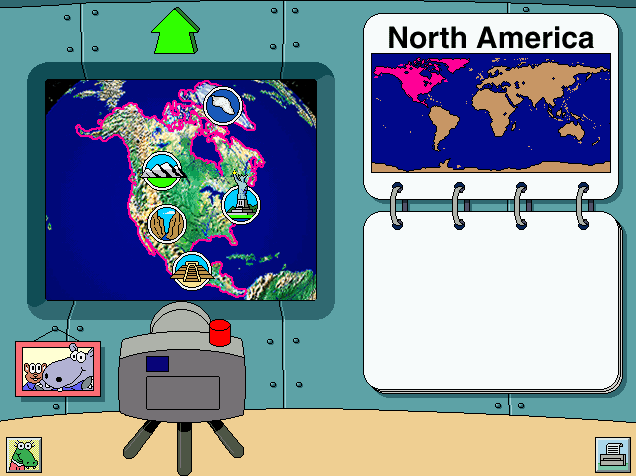
There are three standouts here. Clicking on the rocket ship takes takes you into space, and you get to view the Earth. Zooming in on multiple places gives you plenty of options to explore throughout the planet, including famous landmarks and vistas. The game part here is pretty satisfying and more complex than others.
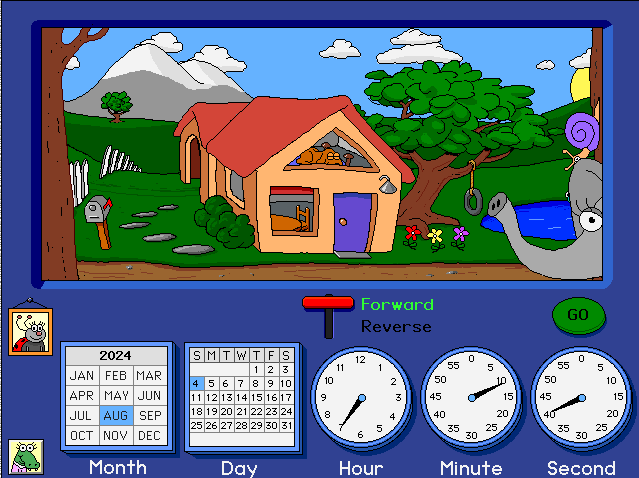
The next is the calendar, which allows you to see Trudy’s neighborhood at any time of day on any day of the year, with more variation than I expected.
Last, we have the jellybean maze, which has you take the point of view of an ant and move from square to square to eat jellybeans. This one’s game mode also has more going on than you’d expect, and is more complex than any other game in the previous three packs.

This pack is solid, with a lot of content to explore for young learners. Even the two games I didn’t mention, the sandbox and the clock, would be enjoyable for a younger player.
Stanley’s Sticker Stories
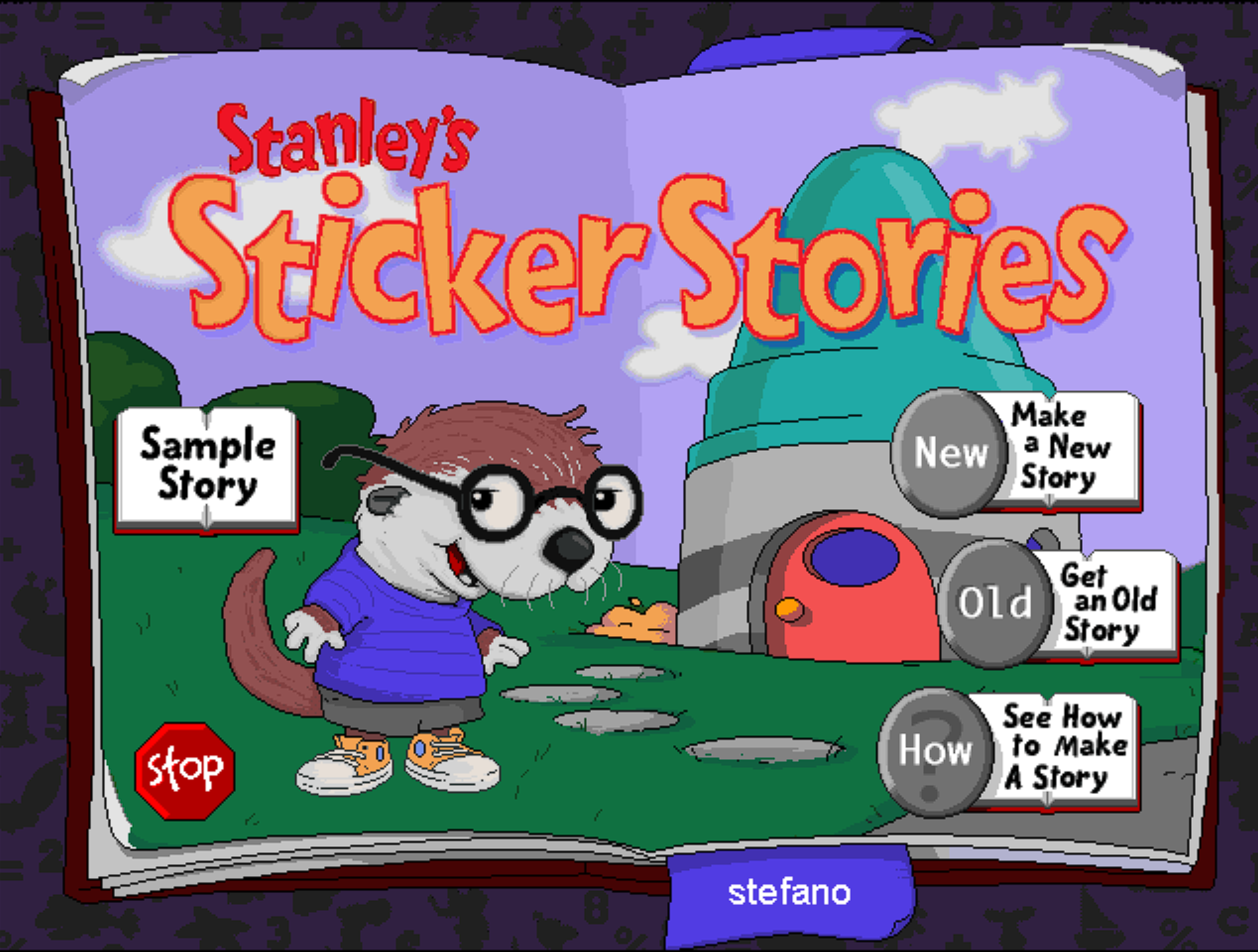
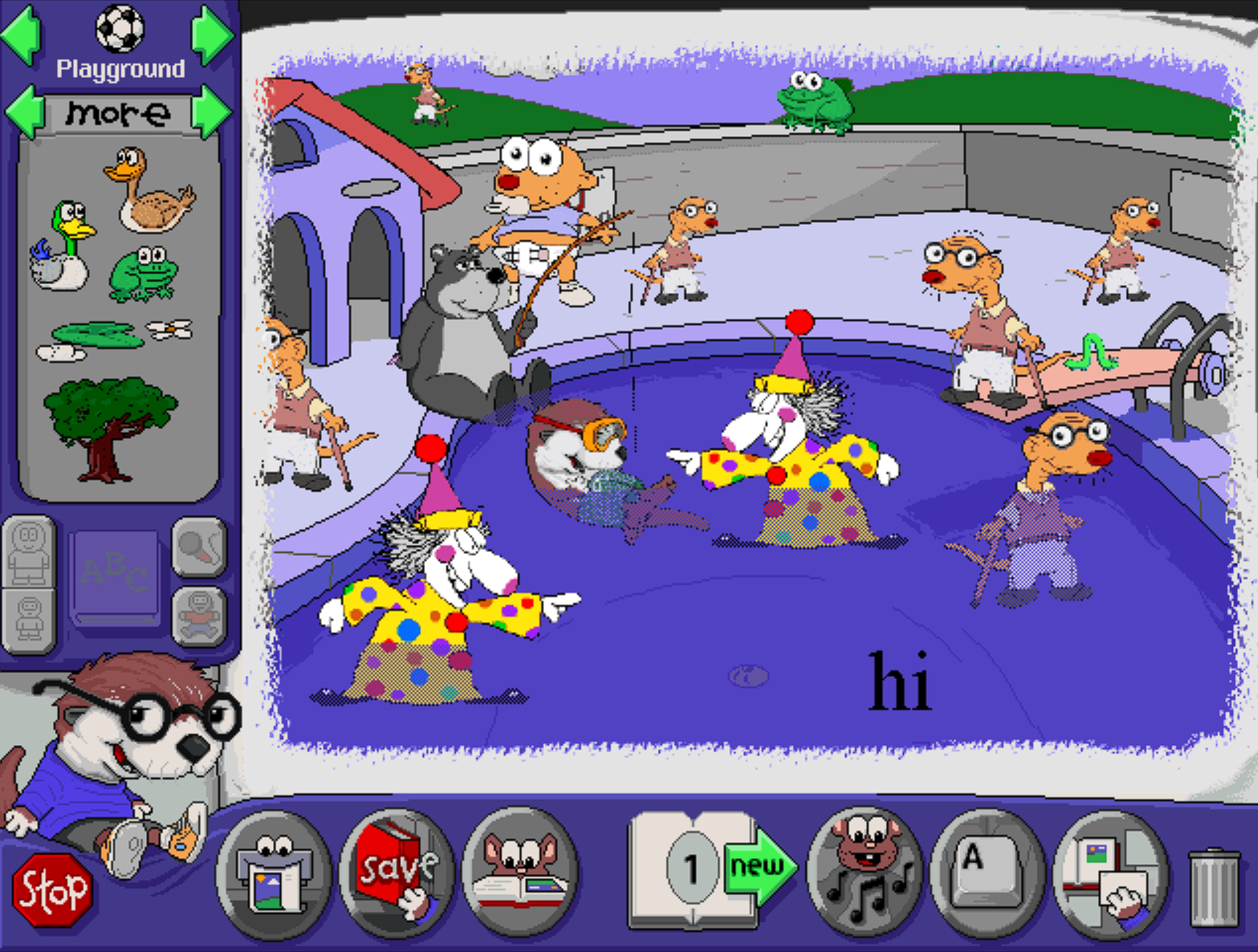
Now we arrive at the odd one out. Stanley’s sticker stories is its own entity for a plethora of reasons that are immediately noticeable. The game is only associated with the others in name and series, but is otherwise completely different. Instead of the minigame style, this one has one main mode – story creation.
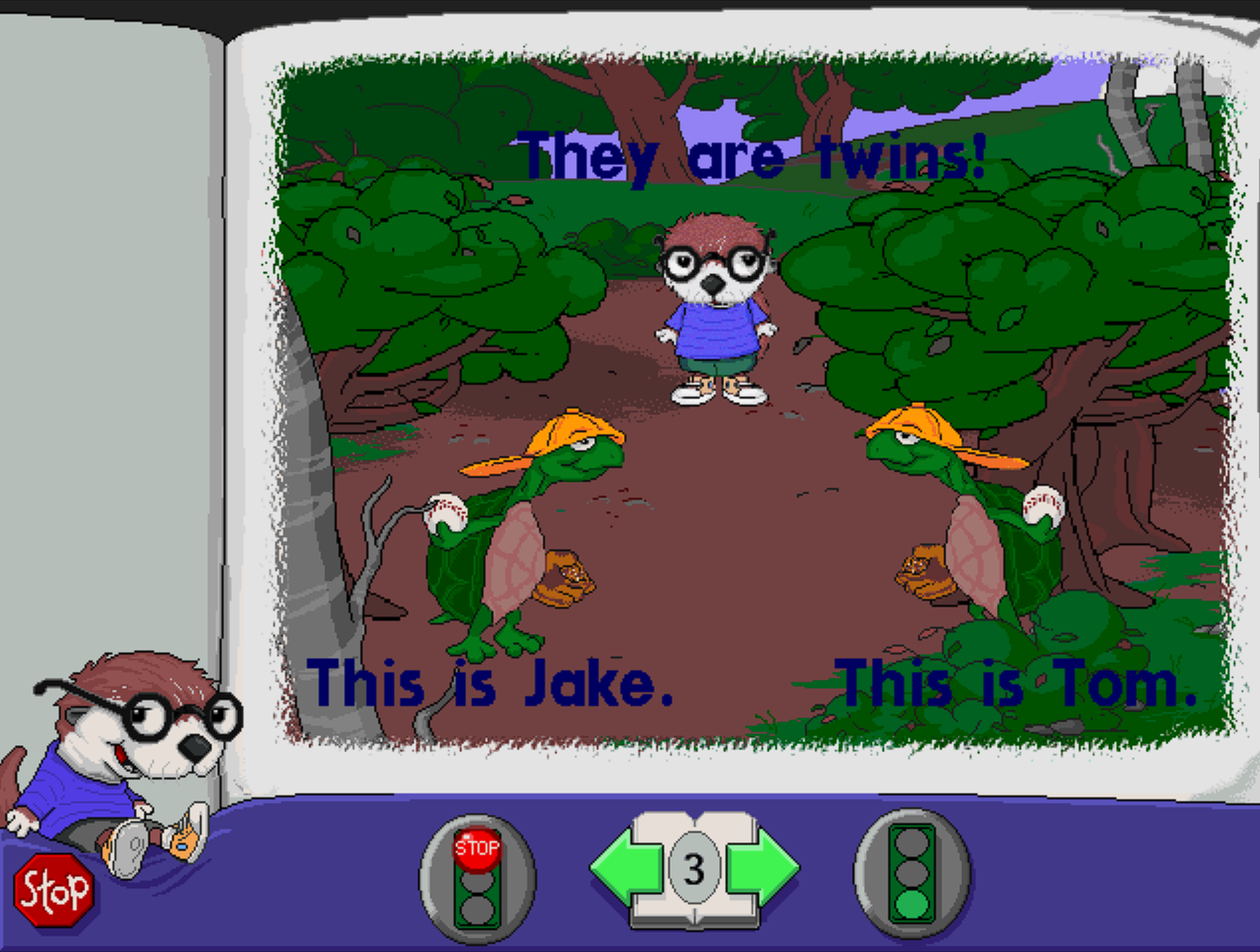
You use “stickers”, add text, add music, and use them to create picture books. It is a lot of fun, and allows for quite a bit of customization. I remember getting hours of gameplay out of this one as a child, creating ridiculous nonsense that I thought was hilariously funny.
Do they hold up?
We’ve looked through five games already, and have arrived, at last, at the question of the hour. Do these games hold up? Well, the answer to that is complicated. There is a ton of good here, and I might have my own child try these out when he is older to see how he reacts to them, and whether or not he enjoys them. They are slow paced and definitely dated, with more jagged pixel edges than modern games due to the lower native resolution they were intended for. Their music is MIDI, and the sound effects and voices have a bit more of a muddy quality than modern games. But despite that, these games are full of solid activities and lessons for younger players, and they will do just as good of a job of teaching these concepts to today’s youth as they did to the youth of yesteryear. However, the problem with recommending these games would be:
Accessibility
As of the time of writing, it is very challenging to get these games running on modern devices. In order to do so, you need to use DOSBox, a program which emulates older Windows systems, a digital disc, and an install of windows 95 or lower (I used 3.1 to play). Therefore, only someone with technical knowhow would be able to get these running, which is unfortunate as they have a lot of great content to offer. Hopefully they will be picked up by a service like Steam or GOG and rereleased, but until then they are notably more challenging to play than the rest of the games on this list.
Final Thoughts
This was a blast from the past to review, and I am so happy I went back through these games! It was thoroughly enjoyable, and I look forward to doing some other edutainment games as I do these lists. It is unfortunate that these type of games are less common/less good nowadays, and though there are likely modern ones that are more up-to-date than the Early Learning House games, these do the job well with an old-style charm that you don’t see nowadays. Expect to see a few more things like this on the Deep Cuts list!
I will not be including this on my Younger Players list due to its lack of accessibility, unfortunately.
I look forward to my next nostalgia-filled replay!
Related Reading
Deep Cuts: Zoombinis
A review of the edutainment game Zoombinis, an old family classic!
Deep Cuts: Pajama Sam – No Need to Hide When It’s Dark Outside
A review of Pajama Sam: No Need to Hide When It’s Dark Outside, an excellent point and click adventure game for young players!
Deep Cuts: Insaniquarium
Taking a look at one of the favorite games of my childhood – Insaniquarium!

 A Thinker in Space
What do you think?